
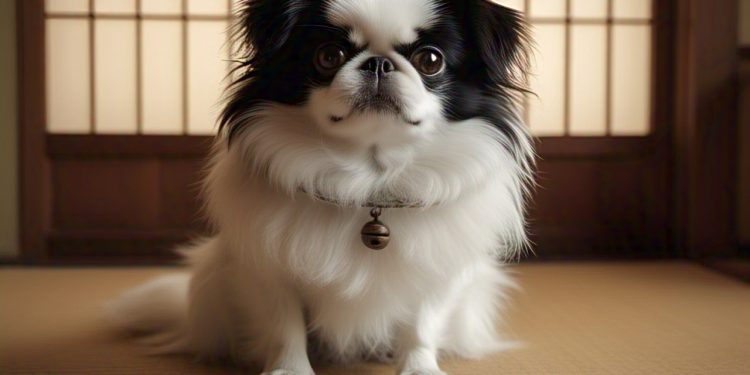
Most people assume Japanese Chins are delicate ornaments — a lap dog that sits still, looks beautiful, and asks for nothing. That picture is about 40% accurate. The Japanese Chin is also alert, headstrong, and deeply cat-like in behavior. They climb furniture, groom themselves with their paws, and give you a look of genuine judgment when you do something they disapprove of. Walk into this breed expecting a passive companion and you’ll be pleasantly surprised — or completely unprepared.
What Japanese Chin Temperament Actually Looks Like Day-to-Day
The Japanese Chin has been a companion dog for over a thousand years, bred originally for Chinese and Japanese imperial courts. That history shaped a dog with one core purpose: human connection. They don’t herd, retrieve, or hunt. They observe, bond, and mirror their owner’s mood with unusual precision.
This breed is often described as cat-like, and that’s the most accurate shorthand available. They perch on high surfaces, bat at objects with their paws, and clean their faces the way a cat does. Several Japanese Chin owners report their dogs adopting behaviors from household cats — watching birds from windowsills, napping in sunbeams, occasionally ignoring commands on principle.
The Loyalty Factor
Japanese Chins tend to bond deeply with one or two people. They’re not unfriendly to others, but strangers get a cool, measured assessment before any warmth. This makes them poor choices for households where the dog needs to be social with many different people regularly. They adapt — but it costs them energy.
With their primary person, the bond is remarkably close. Separation anxiety is a real risk in this breed. A Japanese Chin left alone for 8-10 hours daily will develop behavioral problems: excessive barking, destructive behavior, or depression-like withdrawal. If your schedule keeps you out of the house most of the day, this breed is a bad match. Retirees and remote workers are genuinely the ideal owners.
Japanese Chin With Children and Other Pets
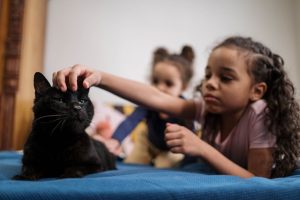
Chins do better with older, calmer children than with toddlers. They weigh 7-11 lbs and can be injured easily by rough handling. They’re not typically snappy or aggressive, but they will retreat and become anxious in chaotic, noisy households. A family with a four-year-old running through the house all afternoon will stress this dog out.
With other pets they generally thrive — especially with cats, for obvious personality reasons. They coexist well with other small dogs. Large, high-energy breeds can overwhelm them physically and emotionally.
Exercise Needs: Less Than You Think, But Still Real
Two 15-20 minute walks per day is sufficient for most Japanese Chins. Their brachycephalic anatomy (flat face, compressed airway) means they tire quickly and overheat in warm weather. A short morning walk and an evening play session covers their physical needs. Mental stimulation matters more to this breed than mileage: puzzle feeders, short training sessions, and interactive toys like the Kong Classic ($12) prevent the restlessness boredom creates.
How to Groom a Japanese Chin Without Making It a Nightmare
Here’s a common mistake: people see the Chin’s silky, flowing coat and assume it needs daily attention. It doesn’t. Unlike a Maltese or Yorkshire Terrier, the Chin’s single-layer coat doesn’t mat easily. A consistent weekly routine handles most of the work.
Tools You Actually Need
Get a pin brush for the main coat — the Chris Christensen Baby Pin Brush ($25) works extremely well on toy breed coats without pulling. Pair it with a stainless steel greyhound comb for finishing and detecting small tangles before they become problems. For the face folds, Earth Rated Dog Wipes ($10 for 100 wipes) beat damp cloths because they don’t leave moisture behind. Moisture in facial folds breeds yeast infections.
The Weekly Brushing Routine
- Start at the ears. The feathering around the ears tangles first. Use the pin brush in short strokes from the skin outward. Hold the hair above any mat — don’t drag through it.
- Work down the body. Brush the neck, back, and sides in the direction of coat growth. The Chin’s coat lies flat naturally, so this takes about 5-7 minutes for most dogs.
- Do the tail and hindquarters last. The tail feathering and the “pants” on the hind legs collect debris. Finish with the greyhound comb to catch anything the brush missed.
- Clean the face folds daily. This takes 30 seconds and prevents vet bills. Wipe between the nose roll and around the eyes every single day, not just on grooming day.
Bathing Schedule and Products
Bathe every 4-6 weeks. The Chin is not a muddy outdoor dog, so more frequent bathing is unnecessary and strips coat oils. Burt’s Bees Hypoallergenic Shampoo for Dogs ($8) is a safe, fragrance-free option that doesn’t irritate sensitive skin. Dry thoroughly after bathing — the facial folds must be completely dry before the dog is left unsupervised. A pet-specific hair dryer on the lowest heat setting works better than towel-drying alone.
Nails every 3-4 weeks. Ears checked monthly for wax buildup or odor. Teeth brushed at least three times per week — small breeds are significantly more prone to dental disease than large breeds, and neglecting this creates expensive cleanings under anesthesia down the road.
Japanese Chin Health Problems: What the Vet Bills Actually Look Like
This is where buyers get blindsided. The Japanese Chin is a generally healthy breed with a 10-12 year lifespan, but several conditions appear with enough frequency that you should budget for them before bringing one home.
| Condition | Frequency in Breed | Average Treatment Cost | Detectable Before Purchase? |
|---|---|---|---|
| Brachycephalic Obstructive Airway Syndrome (BOAS) | High | $1,500–$4,000 (surgery) | Partially — ask about breeding lines |
| Mitral Valve Disease | Moderate | $300–$800/year (medication) | Echocardiogram screening available |
| Patellar Luxation | Moderate | $1,000–$3,000 (surgery if needed) | OFA screening in parents |
| Cataracts | Low–Moderate | $2,000–$4,000 (surgery) | CAER eye exam in parents |
| Episodic Falling Syndrome | Low | Ongoing management, variable | Genetic test available |
Brachycephalic Syndrome: The Issue That Matters Most
BOAS affects flat-faced breeds because the skull structure creates narrowed nostrils, an elongated soft palate, and sometimes a narrowed trachea. The result: the dog works harder to breathe than it should. Mild cases go undetected for years. Severe cases require corrective surgery — typically soft palate resection and nostril widening — costing $1,500–$4,000 depending on severity and location.
Signs to watch for: heavy snoring, snorting, or labored breathing after minimal exertion, frequent gagging, exercise intolerance in mild temperatures. Airlines ban brachycephalic breeds from cargo holds for this reason — the stress of travel can trigger respiratory distress. Never ignore these symptoms in a Japanese Chin.
Neurological Conditions Worth Knowing
Episodic Falling Syndrome is a rare but documented condition in the breed — the dog suddenly freezes, falls, and lies rigid for seconds to minutes, then recovers fully. It looks terrifying but is not painful. A genetic test exists, and responsible breeders screen for it. Ask for documentation before purchasing. A breeder who doesn’t know what this condition is hasn’t done their homework.
Feeding a Japanese Chin: Exact Portions and What to Buy
High-quality small-breed kibble, measured portions, twice daily. That covers it.
Japanese Chins weigh 7-11 lbs. A typical adult needs roughly 180-250 calories per day depending on activity level. Overfeeding is the most common owner mistake — an extra pound on an 8-lb dog represents over 12% of body weight. That scale of excess strains joints, worsens respiratory issues, and shortens lifespan. Use a measuring cup. Never free-feed a Japanese Chin.
Royal Canin Small Breed Adult ($55 for a 13-lb bag) is formulated for toy breed metabolism and has an appropriate kibble size for small jaws. Hill’s Science Diet Small Paws ($48 for 15.5 lbs) is a solid, vet-recommended alternative. For dogs with food sensitivities, JustFoodForDogs offers vet-developed fresh meal plans starting at around $4/day for a dog this size — worth it if your Chin has a history of skin issues or digestive sensitivity.
Japanese Chin vs. Other Toy Breeds: Honest Side-by-Side
The Chin is a specific fit, not a universal one. Here’s how it compares to the breeds it’s most commonly confused with or considered alongside:
| Breed | Weight | Exercise Needs | Grooming Time/Week | Good With Young Kids? | Health Cost Estimate | Trainability |
|---|---|---|---|---|---|---|
| Japanese Chin | 7–11 lbs | Low | ~45 min | Older kids only | Moderate–High | Moderate |
| Cavalier King Charles Spaniel | 12–18 lbs | Moderate | ~60 min | Yes | High (heart disease) | High |
| Shih Tzu | 9–16 lbs | Low | ~90 min | Yes | Moderate | Moderate |
| Pug | 14–18 lbs | Low–Moderate | ~30 min | Yes | High (BOAS, skin) | Low–Moderate |
| Papillon | 5–10 lbs | Moderate–High | ~30 min | Older kids | Low | Very High |
Choose a Japanese Chin If…
- You want a quiet, calm indoor companion that doesn’t need much exercise
- You live in an apartment or small home
- You’re home most of the day — this breed thrives on consistent human presence
- You find the Shih Tzu’s grooming demands too high but still want a visually striking dog
- You’re comfortable with moderate grooming and higher health care costs
Look at Other Breeds If…
- You have toddlers or very active young children — the Cavalier King Charles Spaniel handles that environment far better
- You’re away from home 8+ hours a day — this is a deal-breaker for the Chin
- You want a highly trainable dog for obedience or agility work — the Papillon runs rings around the Chin in both categories
- Budget for veterinary care is tight — the Chin’s potential BOAS and dental costs make it one of the more expensive small breeds to maintain long-term
Finding a Japanese Chin: What to Ask Before You Pay
The Japanese Chin is not a common breed. That’s actually an advantage — demand hasn’t created the same factory-breeding problems seen with French Bulldogs and Miniature Dachshunds. But fewer breeders means the bad ones are harder to screen out unless you know what to look for.
What Does a Responsible Breeder Look Like?
Start with breeders registered with the Japanese Chin Club of America (JCCA). Reputable breeders health-test both parents for patellar luxation (OFA certification), cardiac issues (echocardiogram clearance before age 5), and eye conditions (CAER exam). Ask for documentation — any breeder who can’t produce it doesn’t have it. Puppies should be at minimum 8 weeks old before leaving the litter, have their first vaccines, and have a vet exam on record before sale. Expect to pay $1,200–$2,500 for a well-bred puppy in 2026. Prices significantly below that range warrant more scrutiny, not a celebration.
Is Rescue a Viable Option?
Yes — and often the smarter route. The Japanese Chin Care and Rescue Alliance (JCCARE) operates nationally and places both puppies and adults. Adopt-A-Pet and Petfinder regularly list Japanese Chins from regional rescues. Adult dogs are often already house-trained, have known temperaments, and cost $200–$500 in adoption fees. For any owner who wants to skip the chaos of puppyhood, this is worth serious consideration.
Red Flags That Signal a Bad Breeder
- Multiple breeds available simultaneously with no waitlist
- Puppies available year-round — responsible breeders have limited litters
- No health testing documentation for either parent
- Refuses a home visit, video call, or reference from a previous buyer
- Sells puppies under 8 weeks old
- Can’t answer basic questions about BOAS or Episodic Falling Syndrome
A good breeder will ask you questions too — about your home, your schedule, your experience with dogs. If they just take your money without asking anything, that’s a red flag in itself.
| Factor | Japanese Chin Profile |
|---|---|
| Lifespan | 10–12 years |
| Weight range | 7–11 lbs |
| Daily exercise needed | 30–40 minutes total |
| Grooming time per week | ~45 minutes |
| Best home type | Apartment, quiet household, adult-only or older children |
| Worst home type | Busy family with toddlers, owner away 8+ hours daily |
| Purchase price (breeder) | $1,200–$2,500 |
| Purchase price (rescue) | $200–$500 |
| Annual health budget estimate | $800–$2,000 |
| Best alternative breed (more social) | Cavalier King Charles Spaniel |
| Best alternative breed (more trainable) | Papillon |